

One of the most pleasurable times of year is also the moment yoga teachers find out exactly how fragile their income really is.
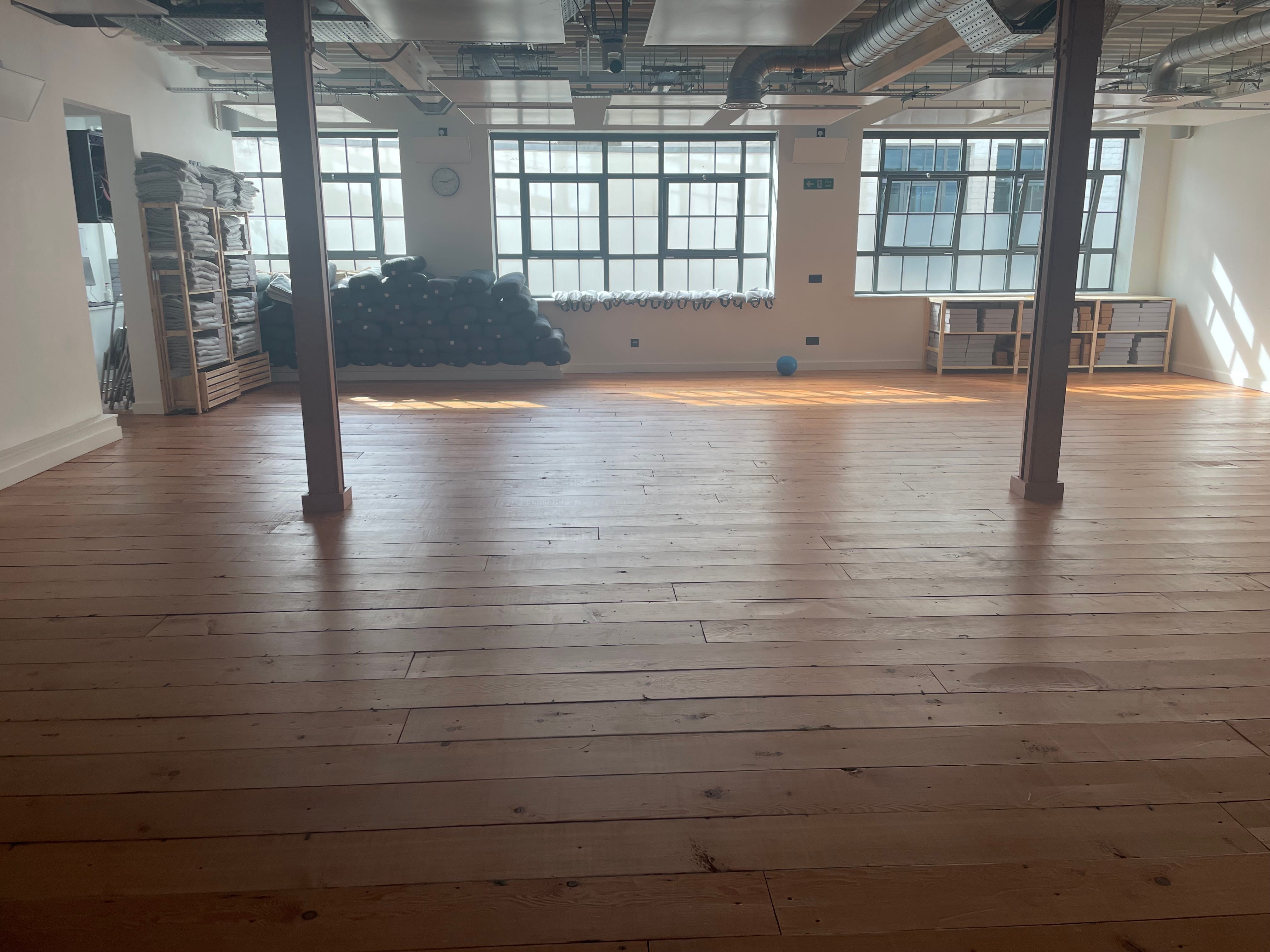
Empty mats, low bookings, last-minute cancellations, teaching two people for pay that barely covers the journey…
It’s an actual UK summer for once, and routines have suddenly gone loose; messages quiet, everyone’s life migrating outdoors. Nobody’s mad about that. What we’re mad about is watching months of classes we spent years building empty out in front of our very eyes. The regulars have dispersed into airports, family homes on the Riviera, sunlit weeks somewhere else entirely. And what starts as a jovial seasonal kickback curdles fast, like rotten eggs. What the hell do we do now?
Let’s be honest summer is tough for yoga teachers, and it’s often the moment the numbers stop adding up.
Because summer doesn’t just mean quieter classes. It’s a sharp reminder of how little earning security most teachers actually have. The drop in attendance strips the job down to its financial truth: many yoga teachers are only ever a few absences, a few cancellations, a few timetable changes away from earning almost nothing. And yes, we chose this life. That doesn’t mean we can’t talk about it with full honesty.
The romance still lingers that teaching yoga is flexible, soulful work that offers a wealth of opportunity and growth if you’re committed enough, good enough, passion enough to eventually turn it into a sustainable living. But for many teachers, especially those working across studios, gyms, and cover slots, that’s simply not the reality. The income model has always been precarious. Summer just makes it impossible to ignore.
A class you spent years building can halve in size within weeks. Studios cancel with minimal notice once attendance dips below whatever threshold makes the class worth their while. And you’re still expected to keep showing up, keep promoting, keep holding the room, keep sounding positive, all this while privately doing the math on whether teaching two people even covers your coffee and croissant.
And unlike most professions, there’s no cushion, guaranteed salary, sick pay, no protection against seasonal fluctuation, and absolutely no compensation when a class gets cut loose at the last minute because it no longer serves the studio business models. The teacher just quietly absorbs the instability and the financial exposure that comes with it.
There’s something almost cruel in that: one of the warmest, most pleasurable times of year is also the moment teachers are forced to confront exactly how fragile their income really is. What looks from the outside like a seasonal inconvenience is, underneath, something far more structural. The profession is built so that lower attendance translates immediately into lower pay, fewer opportunities, and more unpaid labour. When you think about it you’re still expected to deliver the emotional PR on socials and after class. Still answer the same questions about why that headstand isn’t happening yet. Still planning classes, travelling across the city, marketing yourself online, managing your own moral all this while the actual money coming in has shrunk to the size of an airtight bag.
That imbalance is brutal. Our adaptability too often just means accepting unpredictability. Passion is too often used to mask underpayment. At some point do we have to say it plainly? this is skilled work, and skilled work deserves reliable pay? Particularly if you’re holding down these regular perm classes all year round. In most cases the studio has already made the money through the subscriptions and memberships so if a class is suddenly cancelled for the extended summery future, should the teacher be compensated at least the basic to cover their losses? hmmmm…
Yoga is real work. And yet many teachers are paid/treated in ways that suggest the opposite.
Summer just brings that thought into deeper focus. When classes are full, it’s easy to ignore the cracks a busy timetable disguises instability as momentum. But when attendance drops, the whole structure becomes visible. You see how much depends on regulars never missing a week. You see how quickly a studio protects its own margins by cutting a teacher loose if the math stops mathin. You see how little room there is for a teacher to just be a human being with rent, bills, fatigue, a need for rest.
This is why the conversation matters.
If yoga communities actually care about sustainability, accessibility, and integrity, teacher pay has to be part of that conversation not an awkward side note, not something whispered between exhausted teachers after class, but said openly. A profession can’t be healthy if the people holding it together are constantly living this close to the edge.
Summer isn’t the root of the problem It just reveals it.
And maybe that’s the uncomfortable truth underneath all of this: the issue isn’t that summer is uniquely difficult. It’s that summer removes the illusion of stability and shows how many teachers are surviving on momentum rather than security for most of the year. It exposes how much of this profession runs on goodwill, self-sacrifice, and a willingness to keep going even when the numbers stop making sense.
That’s not sustainable. It’s certainly not fair.
Yoga teachers shouldn’t have to rely on perfect attendance, endless self-promotion, and mild-weather panic just to earn enough to live. It’s typically the same when it rains. They shouldn’t have to treat every half-full class as a financial threat. They shouldn’t be carrying the economic risk of an entire system while studios retain all the power to cancel, cut, and reshape timetables with barely any notice or compensation.
If summer teaches us anything, it’s this: for many yoga teachers, earning potential isn’t just limited it’s unstable by design. I spoke to a few yoga teachers who will be taking time off, others are relying on family to help out, some taking on “other” jobs whilst quite a few of us will focus predominantly on our wider business pursuits. A very established yoga teacher told me that for five months of the year she has a different business model. I thought that was interesting. Everything she does from May-September is done outdoors or abroad and she’s somehow managed to maintain her spot in studio classes. She said “I can’t afford to just chill with the studios on this one - I’ve been doing this for 4 years now and it works”. I asked about consistency and if this bothers the studio she works for she just smiled and said “…well what else can I do? To keep doing this job, this is the way it needs to be” seems less like resignation and more like strategy to me and maybe it’s the way forward; building experiences for dedicated clients that are sustainable not just through one thin season, but with enough continuity that teachers can keep earning, and keep enjoying the work, all year round.
And until that changes, the problem is bigger than the season.
Have any of your classes been cancelled and is it affecting you financially?
🎯 No lies told! Thanks for speaking this truth so eloquently Mary💜🙏🏾